
Episode 3 — Liturgy for the Charity Van
(for those who sort the belongings of the dead)
I. The Van at the Door
The charity van pulls up.
The driver is kind but level,
practised in the art of receiving
what the living can no longer hold.
Fenella watches him load the boxes,
each one containing a fragment
of her grandmother’s life:
the wool coat that smelled of lavender,
the teapot with the chipped spout,
the lampshade that caught the afternoon light,
her promise of warmth.
She tells herself this is charity.
She tells herself this is function.
She tells herself her grandmother would approve.
But the van waits,
and the boxes wait,
and the truth waits
in the space between.
II. The Weight of Objects
Clothes that held a body.
Dishes that held a family.
Nicknacks that held a conversation
no one is left to remember.
Each object is a memory
too heavy to keep.
The blue willow plate
with its pattern worn by years of cutting.
To give them away is to release them.
But release is not the same as forgetting.
And forgetting is not the same
as betrayal.
III. Charity or Disposal
Is it charity
to give a dead person’s things away?
Or is it disposal,
a gentle, respectful way
of saying we cannot carry all of this?
The charity driver does not ask.
He loads the boxes
with the same care
as if they contained something fragile,
because they do:
the memory of a life
that no longer needs its objects.
Charity is for the living.
The dead do not need our generosity.
But the living need to let go
so they can keep what matters.
IV. What We Keep, What We Release
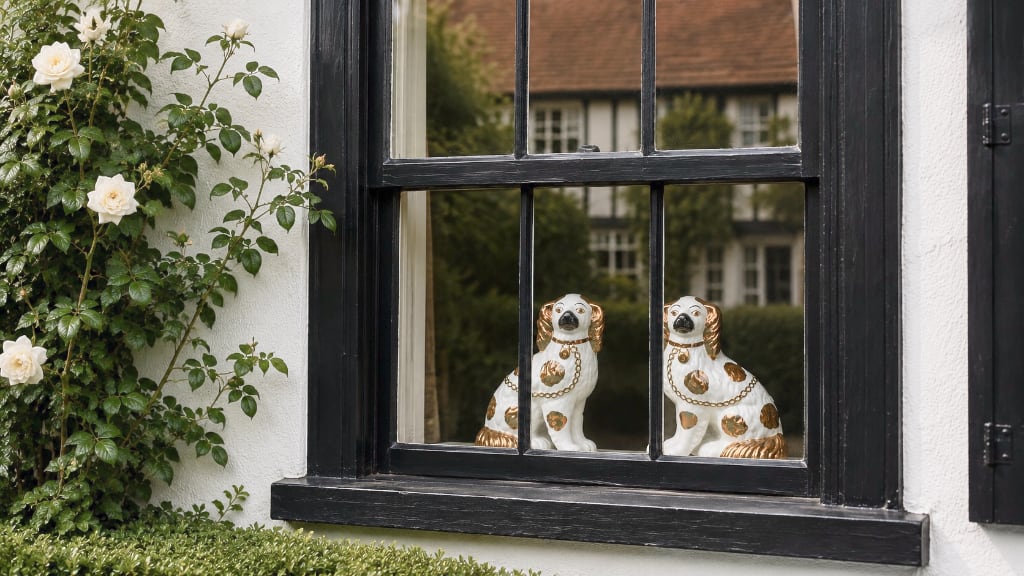
Fenella keeps the dogs on the windowsill.
She keeps the spiral letter lock.
She keeps the ring in her pocket,
not yet sure what it means.
She releases the coat,
the teapot,
the lampshade,
the dishes that held
her grandmother’s cooking,
her grandmother’s stubborn presence.
She releases them
not because she does not care,
but because she cares too much
to leave them mouldering
in a house that no longer breathes.
V. For the One Who Decides
Greet the van at the door,
may it carry what you cannot hold
to someone who can.
See the boxes.
May they find their way
to hands that will love them
as your grandmother loved them.
Remember the objects you release.
May their memories be carried
not in their weight,
but in your heart.
Hold the objects you keep.
May they tell you
what you need to know
about the one who left them.
And bless those
who stand between
the keeping and the letting go,
who know that charity
is not the same as disposal,
and that release
is not the same as forgetting.
The dead do not need objects.
The living need to remember
that love is not kept in a box
or given away in a van.
It is held in the hands
that learn to let go.
Written as a worksheet and mind-map for Denise’s Six Sentence Story, including the word “function”. All previous Liturgies are here. Some images created with Midjourney; all writing is my own original work.©Misky 2006-2026.


Your comments are always welcome