
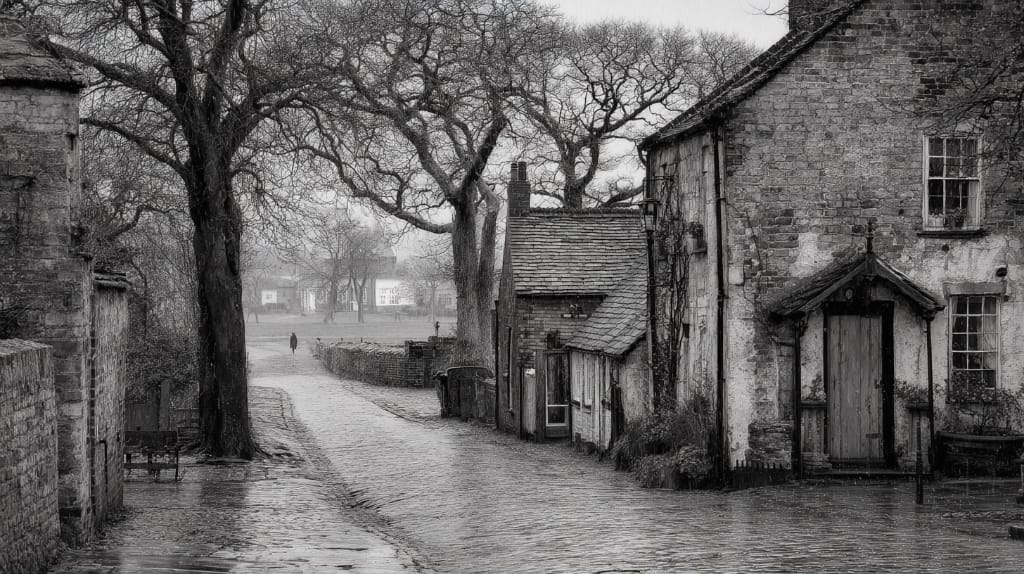
The Architecture of a Moment
Notes: Rooted in the oldest English tradition, Anglo-Saxon accentual verse follows the rhythm of breath and heartbeat rather than syllable or rhyme, where meaning is carried by cadence, image, and pause.
The Architecture of a Bell (long form)
Mum had a bronze dinner bell.
She’d shake a frantic tune
from its metal throat,
and we’d come flying,
fledglings called to the feed,
wings beating
against the bluster of her winter.
She was a constant weather system,
a low-pressure warning
moving through the house.
And one day, the damned bell,
as Dad called it, went missing.
A quiet conspiracy
of children.
Her response wasn’t a question,
but a ritual.
Without a sound,
at the appointed hour,
we still swooped in,
crows called to a late feed,
a flock answering
a ghost.
And Mum never spoke of it.
Her silence
became a gentler bell.
Years later, when I moved away,
Dad, with a slow, knowing hand,
dropped the cold bronze weight
into my suitcase.
A dormant seed
of a family’s complicated love.
Now it sits on my shelf,
a sculpture of a memory
I cannot ring.
Its silence
the truest tune
it ever played.
The Architecture of a Bell (Anglo-Saxon Accentual Verse)
Bronze-throat bell,
Mum’s sharp summons —
she shook storms
into the supper hour.
We flew like fledglings,
hearts wind-battered,
beating our wings
through her winter mood.
Pressure rising,
weather in the walls;
one day the bell
vanished quietly.
Silent response —
a ritual born:
we came anyway,
ghosts to the call.
Mum said nothing,
her hush a kindness;
silence ringing
where metal once ruled.
When I left home,
Dad’s knowing hand
slipped the cold weight
in my suitcase,
a bronze seed
of tangled love.
Now it rests waiting,
mute on my shelf —
its stillness sounding
the truest truth.
Written for Writers’ Digest Poem-a-Day Challenge, prompt word Response. Poems/prose, some AI/images ©Misky 2006-2025.


 It's Still Life
Your comments are always welcome