
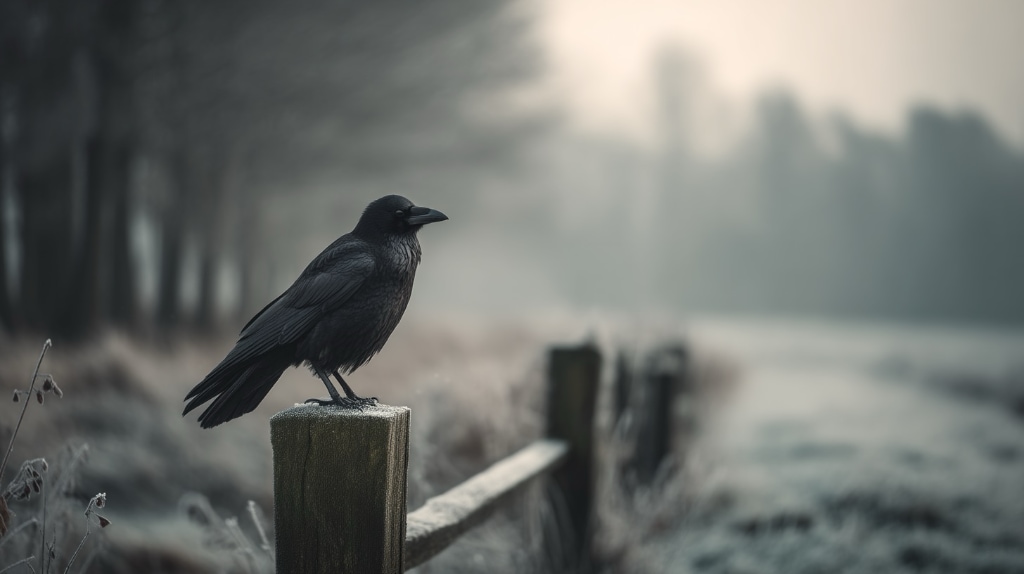
The Architecture of a Moment
The Architecture of an Omen (Long Form — Trope)
The crow lands
with that heavy black punctuation
he always brings,
as if the day itself
needed a full stop
before beginning again.
People call him an omen,
a bad-luck feather,
a shadow stitched
to the world’s hem.
But this is not doom.
This is direction.
He tilts his head,
eyes the path I’ve been avoiding,
gives one sharp caw
that slices the quiet clean.
And I understand.
He is not here
to warn me away,
but to point me toward
the thing I am afraid to want.
A crow does not predict endings.
A crow reveals
the beginning
you are trying not to see.
Notes: Rooted in the oldest English tradition, Anglo-Saxon accentual verse follows the rhythm of breath and heartbeat rather than syllable or rhyme, where meaning is carried by cadence, image, and pause.
The Architecture of an Omen (Accentual Verse)
The crow comes down, lands
a dark full stop,
black mark of day
resetting light.
Folk name him omen,
harbinger, curse;
a shadowed threat
in feathered form.
But this is guide,
not grief nor end.
His single caw
cuts through the hush,
and with that cry
he shows the path.
Not doom he brings,
but whispered start—
the hidden way
I fear to take.
A crow reveals
the road begun.
In Anglo-Saxon folklore, a rightward movement in imagery, as in the crow looking to the right, is associated with conscious action, a willingness to engage with the next stage of life or challenge. Written for Writers’ Digest Poem-a-Day Challenge. Poems/prose, some AI/images ©Misky 2006-2025. image alt text: A crow perches on a frosted fence post along a quiet winter path.


 It's Still Life
Leave a reply to Misky Cancel reply