
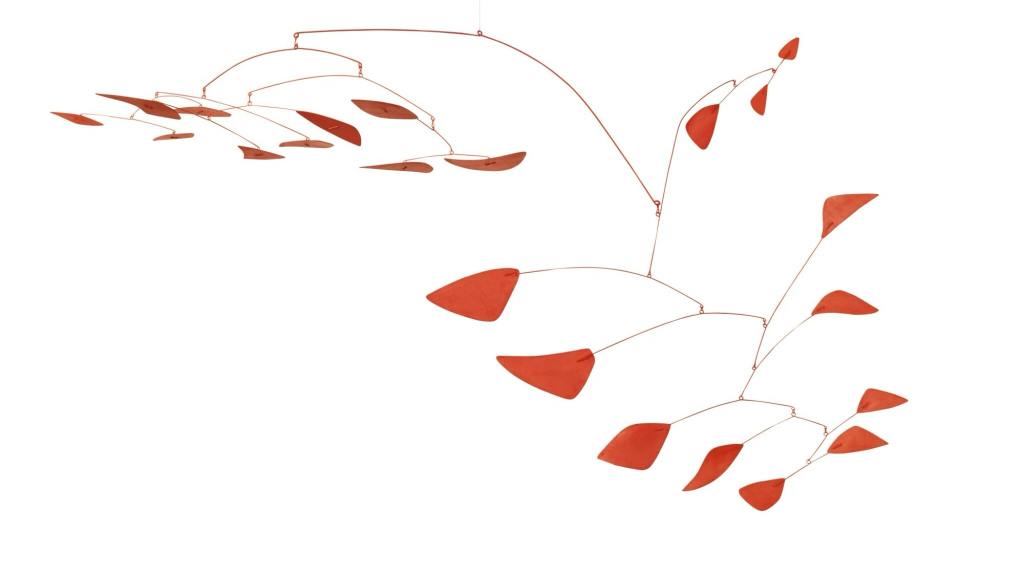
A choreography of shadow and balance. These poems trace the kinetic hush of Alexander Calder’s mobiles: laughter forged in wire, physics caught mid-lilt, and the unseen air that puppeteers grace from stillness. Best read with music that understands whimsy and weightlessness. Hit play, then read.
Calder’s Circus of Air
Imagine the shape of laughter
cast in metal, each red wing
a frozen gasp, each blue curve
the after-image
of a child’s heartbeat.
The wires are invisible laws
of some playful gravity.
Shapes flirt with their own shadows.
Watch how the saffron disc
sways like a sun-drunk
on its own light.
Watch how the black spiral
swallows the wall whole,
then spits it out again.
This is the physics of joy.
Algebra as balance.
A pause before the next gust
sends this menagerie
tumbling into grace.
The shadows are performers—
stretching, shrinking, pirouetting.
The magic isn’t in the metal;
it’s in the air’s restless hands
that keep rearranging it.
Shadow Rehearsal
The shadows don’t obey—
they waltz off the wall.
They lick the edge of each disc,
then fold into paper birds
blinded by the sun.
Watch how they tremble
when the real shapes
refuse to sit still.
The air is teaching
the walls how to fly.
Mobile as a Blind Bird
The crowd gasps
at those wires I can’t see,
how a child
becomes the hinge
that swings the black wings
into motion.
The shadows
brush my skin
like braille
from a migrating flock.
I hear my grandmother’s voice:
Sight’s overrated, my girl; hear the shadows with your bones; let your pulse be your plumb line.
Later
I stand where the air itches
with unfinished motion—
a child shouts, “Look!”
a docent’s remarkable balance,
your hands catching shadows
like tossed coins.
My eyes close as mobiles dance
to the silence
of my pulse.
Poems/prose and some images ©Misky 2006-2025.
 It's Still Life
Your comments are always welcome